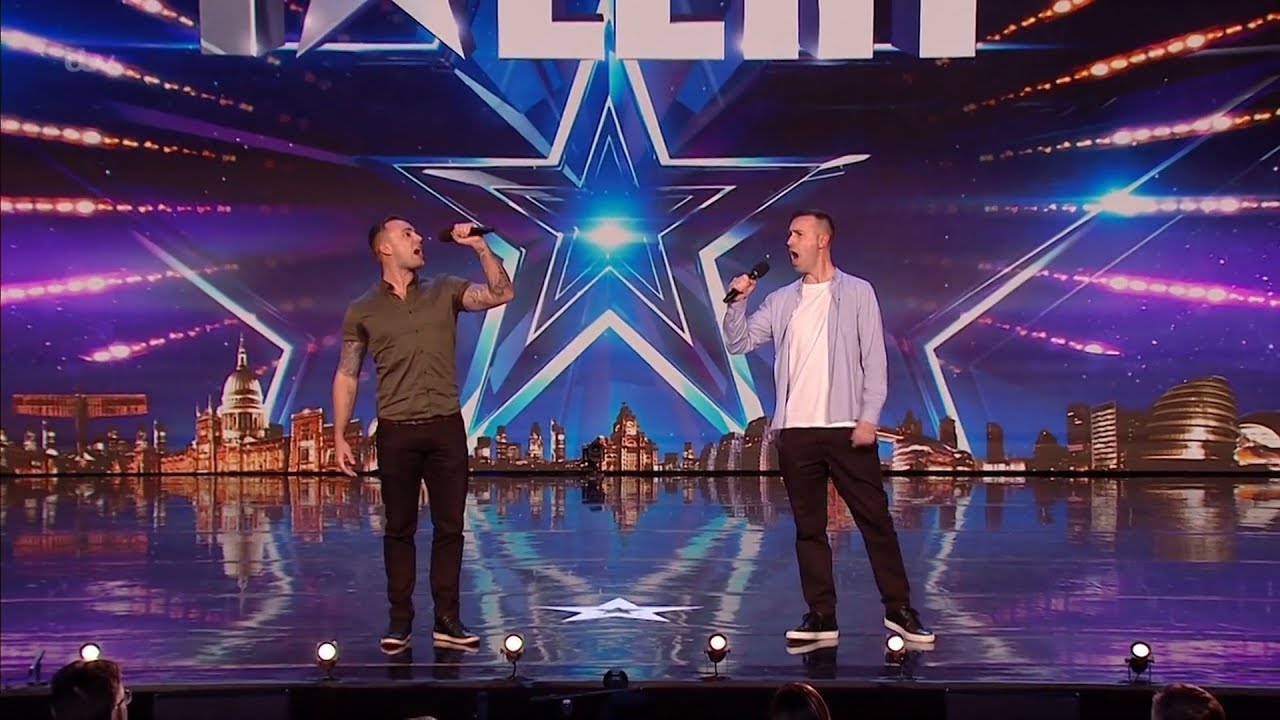
When Vince and Lee, performing as The Soldiers of Swing, walked onto the Britain’s Got Talent stage in 2020, it was impossible not to smile at the sight. Their vintage military-style uniforms — crisp jackets, polished boots, and jaunty caps — looked like they’d been plucked from a black-and-white newsreel. For a second it felt like someone had opened a time capsule and set it down in front of the judges. But their look was only the opening note; what followed was a reminder that style without substance can’t hold an audience. These two had both.
The moment the band kicked in, you could tell this was going to be more than a novelty. Vince and Lee didn’t just shuffle through a few steps; they exploded into a full-on swing routine that blended tight choreography, close harmonies, and a theatrical sense of fun. The opening lines were crisp and theatrical, their voices pairing seamlessly in the kind of old-school, barbershop-esque harmony that instantly evokes smoky dance halls and wartime radio shows. Then the dancing began: synchronized kicks, sharp arm work, well-timed turns, and a series of cheeky little double-takes that made the routine feel conversational — as if they were trading barbs and jokes with the audience through movement.
There was an attention to detail that made the act feel polished rather than plucked from a fancy dress shop. Their footwork was precise, with quick taps and clean pivots that suggested hours in a rehearsal studio. Small flourishes — a jaunty salute, coordinated little head tilts, a perfectly timed hip swivel — added personality without ever feeling forced. It’s the kind of careful staging you see in professional revues: nothing wasted, every beat with a purpose. And because their timing was so tight, the effect was cumulative; each perfect move elevated the next, building momentum until the crowd couldn’t help but clap along.
Their chemistry was another key ingredient. Vince and Lee moved like a pair who’d worked out the kinks long ago: playful interruptions, shared glances, and a seamless handoff of dance lines that kept the energy bouncing between them. That rapport made their performance feel like a conversation rather than two performers competing for attention. At one point, Vince sprinted across the stage to pull Lee into a sudden, exaggerated dip, and for a beat the audience laughed with surprise before erupting into applause. Those spontaneous moments — or brilliantly rehearsed to appear spontaneous — gave the routine a lived-in quality that’s hard to fake on a talent show stage.
As the act built toward its climax, the studio atmosphere changed. Initially polite smiles and curious looks transformed into full engagement: feet tapping, heads bobbing, and people in the crowd clapping on the beat. The judges, who often keep a professional distance, began to lean forward, visibly entertained. A few exchanged amused glances, one or two tapped their hands on their knees, and by the end the entire room was on its feet. That shift — from mild curiosity to outright celebration — is a testament to how effectively Vince and Lee sold their concept.
Beyond the immediate spectacle, there was something nostalgically comforting about the performance. In a competition often dominated by showstoppers that rely on spectacle or shock, The Soldiers of Swing offered something more classic: pure, well-executed showmanship. Their act wasn’t trying to break the mold so much as celebrate a particular moment in entertainment history. Watching them felt like being invited into a wartime canteen where people gathered to forget their troubles for a few minutes and dance. It’s an emotional shortcut: the costumes trigger memory of an era, the music triggers a foot-tapping response, and the smiles do the rest.
The routine also showcased a respect for craft. Their harmonies were tight, their phrasing was clean, and their choreography displayed an understanding of syncopation and musicality. Those elements made the act feel professional; you could imagine it slotting comfortably into a West End revue or a specialty theater night. It wasn’t just nostalgia for nostalgia’s sake — it was a carefully constructed piece that honored the tradition it referenced.
When the final chord rang out and Vince and Lee took their bow, the applause felt both celebratory and grateful. The audience wasn’t just appreciating a gimmick; they were acknowledging a performance that had been thoughtfully put together and joyfully delivered. Backstage footage and social media later showed viewers sharing clips, tagging friends with “you’ve got to see this,” and praising the duo for bringing such a warm, communal energy to a competitive format.
In the end, The Soldiers of Swing did more than get a few laughs and a round of applause. They transported people, if only for a few minutes, to a different time and mood — a wartime party where worries were set aside and everyone joined in the fun. That ability to evoke atmosphere while delivering top-tier entertainment is why their audition stands out: two men, vintage uniforms, and a contagious performance that turned a talent show stage into a proper celebration.