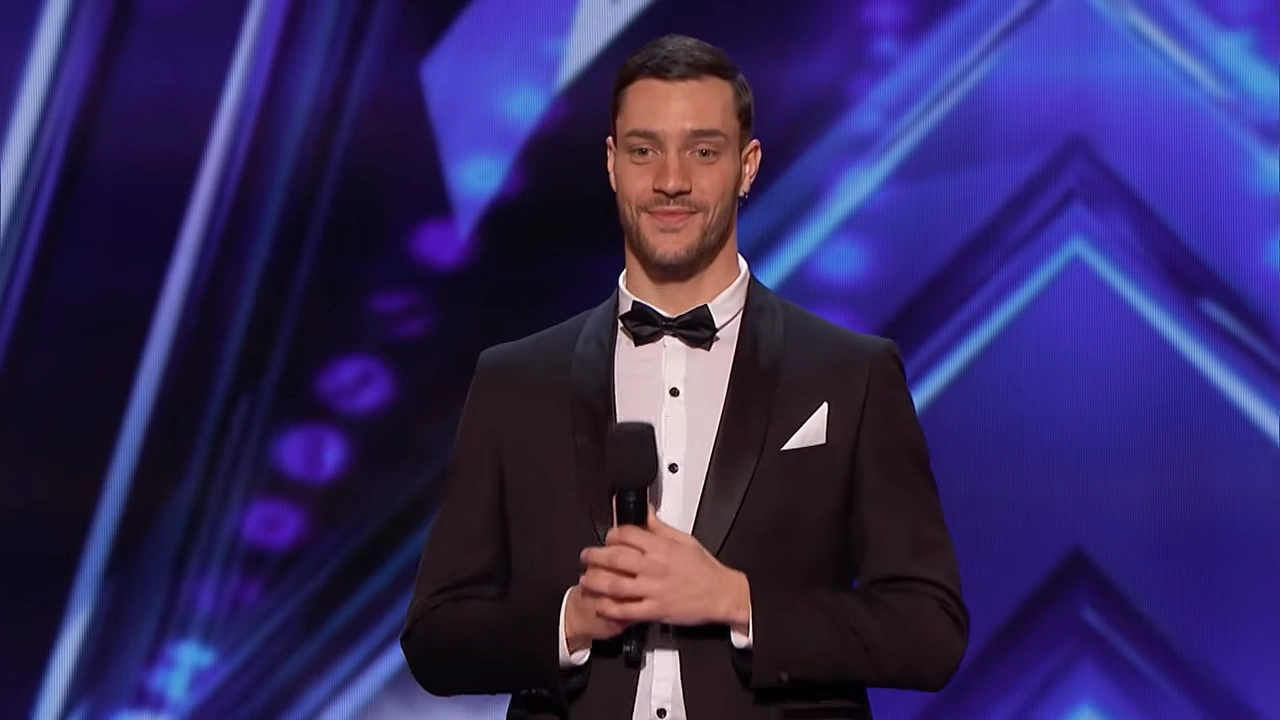
When Patricio Ratto walked onto the stage, there was a quiet confidence about him that belied the nervousness he admitted to feeling earlier. He’d introduced himself as a classical pianist from Italy and had shared a small, intimate piece of his life before the first notes sounded: he had been a shy child, someone who retreated into the corners of rooms and found it difficult to speak up. The piano became, almost by accident, his refuge. At six or seven years old, he told the story of how he would sit at the upright instrument in his family’s living room and let the world for a while fall away. The keys were steady, the sound was honest, and in those hours he discovered a way to say things he didn’t yet have words for.
That early love affair with the instrument grew into something more than technical skill. Patricio described how, as a teenager, he would practice late into the night, not out of obligation but out of a feeling of necessity — as if the music was a language he needed to practice to keep from losing. When he spoke of Beethoven, there was a softness in his voice that made it clear this wasn’t just repertoire; it was relationship. “Beethoven is everything for me,” he said simply, and you could tell he meant it. He explained how certain passages from the master would sweep over him like a tide, carrying away the mundane and leaving a deep sense of purpose in its wake.
He chose to honor that connection by performing a Beethoven piece — a deliberate, heartfelt choice. From the first measures, the audience could feel the depth of his attachment. His phrasing was reverent; his dynamics felt like conversation, not performance. He treated the music as if it were fragile and alive, coaxing nuance out of every phrase. There were moments when his hands seemed to hesitate, listening, and then rush forward as if to embrace something only he could hear. Little details stood out: a slight lean of the head toward the piano when a theme returned, the way he breathed through a long diminuendo, and the faint smile that crossed his face when a passage resolved the way he had imagined in private rehearsals.
And then, without warning, the entire atmosphere changed. Midway through the piece — at a point where the music had built to a fervent intensity — Patricio rose from the bench and, far from disrupting the integrity of the work, transformed it. He broke into a fierce, almost primal dance that seemed to be an expression of the same feeling pouring from his fingers: urgency, defiance, joy. It wasn’t a contrived movement meant to distract; it was an eruption that had been brewing under the surface, a physical manifestation of the music’s energy. He stamped and spun, arms slicing through the air in rhythms that echoed the piano’s accents. His face, usually composed, was now alive with emotion — fierce, playful, and utterly open.
The audience and judges were visibly taken aback. A few gasps slipped out, chairs leaned forward, and for a moment the room vibrated with stunned silence before applause began to ripple through. What might have been dismissed as a gimmick in less capable hands felt, in Patricio’s case, like the only honest way to complete that musical sentence. The dance didn’t undermine the Beethoven; it amplified it. Each movement seemed to highlight a phrase, translating sound into gesture. Where the music demanded weight, his steps grounded it; where it suggested release, his body flew. It was as if the shy child and the devoted pianist had merged into a single, liberated performer who could no longer contain what the music made him feel.
That juxtaposition — the meticulous piano technique paired with raw, athletic dance — made the performance unforgettable. There were concrete moments that stayed with people afterward: the quick, sharp tap of his foot that matched a staccato left-hand figure; the long, expansive sweep of his arm that mirrored a rising arpeggio; the moment he returned to the bench and resumed playing as if perhaps that movement had been the missing breath the piece needed. Judges whispered among themselves, audience members exchanged astonished looks, and many later confessed that the scene had given them goosebumps.
Beyond the spectacle, the deeper story was what moved people most. Patricio’s narrative of transformation — a shy child finding solace in music and then finding a voice on stage — resonated. His willingness to show vulnerability, to step away from a purely classical presentation and reveal a more physical, human response to music, felt like a small act of courage. It reminded everyone that artistry is not only about flawless execution but about truth-telling: about taking the feelings that live in private practice rooms and letting them spill into public space.
After the final chord faded, the applause was not merely polite; it was a release. People rose, not only for technical prowess but for witnessing an artist who had made his passion visible in the most complete way — through sound and movement, restraint and abandon. Patricio’s audition became more than a tribute to Beethoven; it was a testament to how music can transform a life, coaxing out hidden parts of ourselves and giving them permission to be seen. In that brief, electrifying performance, a shy child’s secret language became a shout — and it left everyone in awe.